



Series: We Demand Better, Part 3
This is Part 3, and the gloves are off. We are beyond polite discussion. This is the practical, gritty, and science-backed manual written by a parent who stayed up all night reading medical journals because no one else was going to save us.
When we left the hospital that first time, I got a stack of papers. I got a dosing schedule that requires a PhD in calculus to understand. I got a list of “Red Flags” to watch for.
Do you know what was missing?
I didn’t get a manual on how to handle a child whose nervous system is currently being carpet-bombed by synthetic cortisol – Prednisone.
Doctors treat the disease but ignore the behavior. They look at the “‘Roid Rage”, the screaming, the shaking, the sheer panic in our kids’ eyes, and they shrug. “It’s a common side effect,” they say. “It will pass when we taper.”
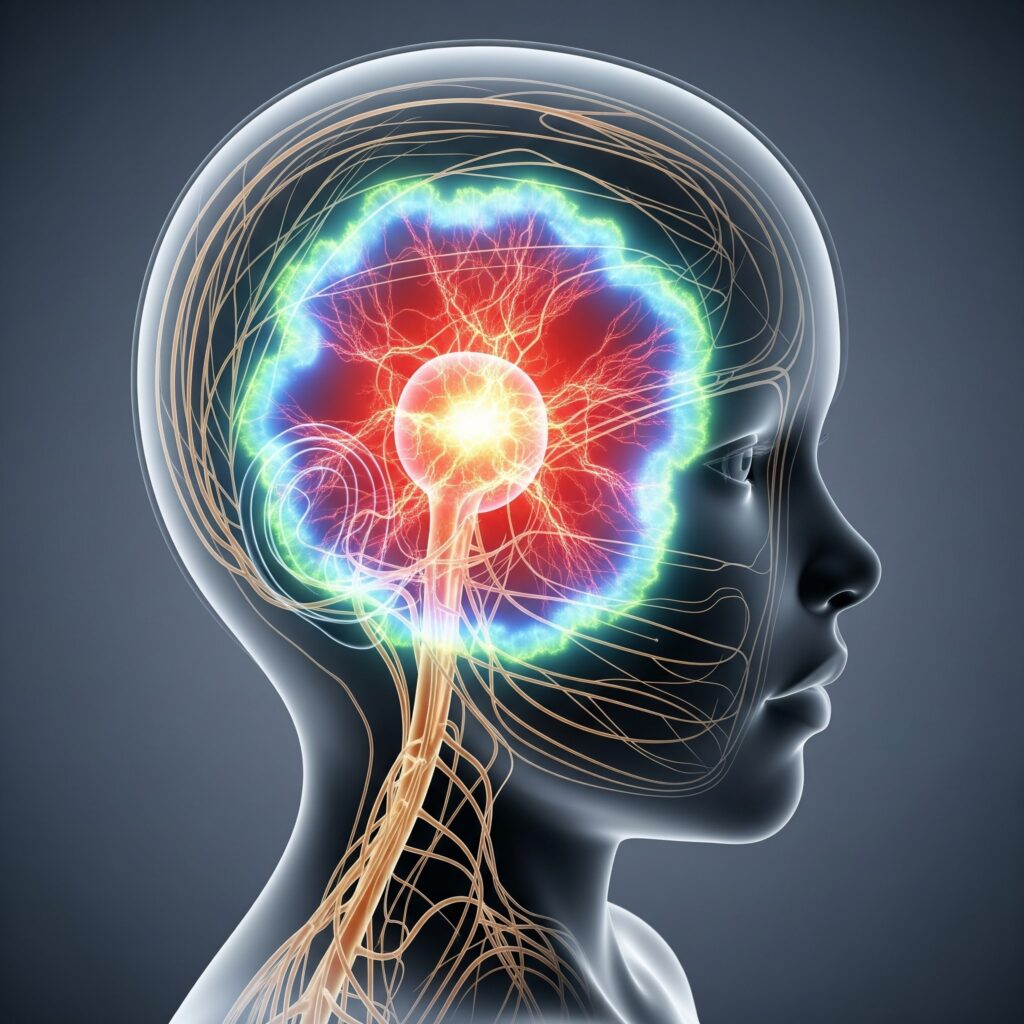
That answer is useless when your child is throwing a Lego set through a window because their body feels like it’s vibrating. Nervous system regulation for kids on steroids is the key, and since the medical establishment won’t give it to us, we hack the system ourselves.
I went to PubMed. I dove into polyvagal theory and sensory integration. I paid $1000s of dollars to trauma therapists who teach! If they won’t help us, we become the experts. Here are four science-backed ways to trick your child’s body out of “Fight or Flight” and back into safety.
We Demand Better (But Until Then, Let’s Stick Together)
1. The Ice Water Reset (The Mammalian Dive Reflex)
The Scenario: Your child is in full meltdown mode. They are screaming, red-faced, and logically unreachable. This is a sympathetic nervous system storm, and a perfect time for calming Prednisone brain.
The Hack: Cold water.
The Science: This instantly engages the Mammalian Dive Reflex. When cold water hits the area around the nose and eyes (the ophthalmic division of the trigeminal nerve), the brain believes it’s underwater and must conserve oxygen. It instantly sends a signal to the Vagus nerve to slow the heart rate. It’s a physiological “hard reset” for the nervous system [1].
How to do it:
- Parent-Friendly: Grab a bag of frozen peas (or an ice pack) wrapped in a thin paper towel and place it firmly over their eyes and the bridge of their nose for 15-30 seconds.
- The Vibe: Don’t make it a punishment. Make it a game or a rescue. “Your brain is on fire; let’s cool it down.”
2. Heavy Work (Proprioceptive Input)
The Scenario: Your child is literally bouncing off the walls. They are aggressive, shoving siblings or crashing into furniture. They feel “buzzy,” signaling a need for proprioception for sensory overload. Welcome to Prednisone brain!
The Hack: Make (GENTLY) them carry something heavy.
The Science: Prednisone often creates a sensory processing disorder-like state. The body feels unsafe and ungrounded. Proprioception (the sense of body position) releases calming serotonin and dopamine. “Heavy work” pushes back against the joints and muscles, sending a clear message to the brain: “I know where my body is. I am safe.” Occupational therapists use this exact technique for sensory regulation [2].
How to do it:
- The “Wall Push”: Have them try to push the wall over with all their might for 20 seconds.
- The Burrito: Roll them up tight in a heavy blanket or yoga mat (deep pressure therapy).
- The Heavy Carry: “I need you to move these cans of soup to the other room.” Or fill a backpack with books and have them wear it for 15 minutes.
3. The “Low Hum” (Vagus Nerve Stimulation)
The Scenario: They are anxious, weepy, and can’t sleep. The classic “wired but tired” phase where a little vagus nerve stimulation for kids can help. Ugh. Prednisone brain!
The Hack: Humming or low-tone singing.
The Science: The Vagus nerve passes through the vocal cords. Creating a deep, physical vibration in the throat (through humming, chanting, or singing low notes) physically stimulates the nerve, which increases vagal tone. A high vagal tone is directly associated with the body’s ability to relax and recover quickly after stress [3].
How to do it:
- The “Om”: Sit with your child (chest to back) and hum a low, deep “Voooooo” sound. The vibration resonates in their chest and yours.
- The Straw Trick: Have them blow bubbles in a glass of water with a straw. The long, forced exhale combined with the vibration is a double-whammy for calming the heart rate.
4. Bilateral Stimulation (Walk it Out)
The Scenario: They are stuck in a loop of negative thoughts or repetitive anger: “I hate this, I hate you, I hate this.” Sigh. Prednisone brain.
The Hack: Get them moving left-right-left-right.
The Science: This is the foundation of EMDR (Eye Movement Desensitization and Reprocessing) therapy. Rhythmic bilateral stimulation (engaging the left and right sides of the body alternately) forces communication across the corpus callosum. This helps the brain process distress and reduces the intensity of the emotional charge [4].
How to do it:
- The March: Don’t just sit there. Go outside and walk. The simple rhythm of left foot, right foot helps the body process the excess cortisol.
- The Tapping: If you are stuck in bed or in the hospital, tap their knees alternately. Left, right, left, right. Keep a steady beat like a metronome.
- Sing With Them and Tap Your Knees! Sign a catchy tune and tap your knees with your hands to the beat, then switch hands and knees!
We Are the Neurologists Now
I shouldn’t have to know what the Vagus nerve is. I shouldn’t have to know about proprioceptive input. I should just be a parent, practicing prednisone parenting tips that are about love, not science.

But until the pharmaceutical companies develop a steroid that doesn’t set our children’s brains on fire, or until the hospitals provide us with behavioral therapists alongside the nephrologists, we are on our own. And while we demand better, we’ve got to come together to get through this.
So, freeze the peas. Push the walls. Hum the songs.
We do whatever it takes to survive the taper.
Sound off: Have you found a weird trick that snaps your kid out of the Prednisone Fog? A specific song? A weighted blanket? Put it in the comments. We need all the data we can get.
References (Because we do our homework, even if we are tired):
[1] Schagatay, E., et al. (2007). The mammalian diving response. Journal of Applied Physiology.
[2] Reynolds, S., et al. (2010). A Systematic Review of Sensory-Based Treatments for Children. Pediatric Physical Therapy.
[3] Porges, S. W. (2011). The Polyvagal Theory: Neurophysiological Foundations of Emotions, Attachment, Communication, and Self-Regulation.
[4] Shapiro, F. (2001). Eye Movement Desensitization and Reprocessing (EMDR): Basic Principles, Protocols, and Procedures.
Disclaimer: I am a parent with an internet connection, not a doctor. These are nervous system regulation techniques, not medical advice. If your child is experiencing severe mental health side effects, please harass your doctor until they listen.