



12 Days Post Transplant, 24 Days in Hospital

The last week has been a week of alarms and answers, of holding steady while the ground moved under us, and we are all still catching our breath. Through all of it were these beautiful human moments, the ones we shared in real time on socials to share the rhythm of our days. Before I share the most current update, here’s a recap of how the week unfolded.
Recap from Socials
Post Transplant Day 4 – Hospital Day 16

Post Transplant Day 5 – Hospital Day 17

Post Transplant Day 6 – Hospital Day 18 (video)
The option to embed the video is currently not working for me. You can click the following to reach the video on Facebook: Kya walking
Post Transplant Day 7 – Hospital Day 19

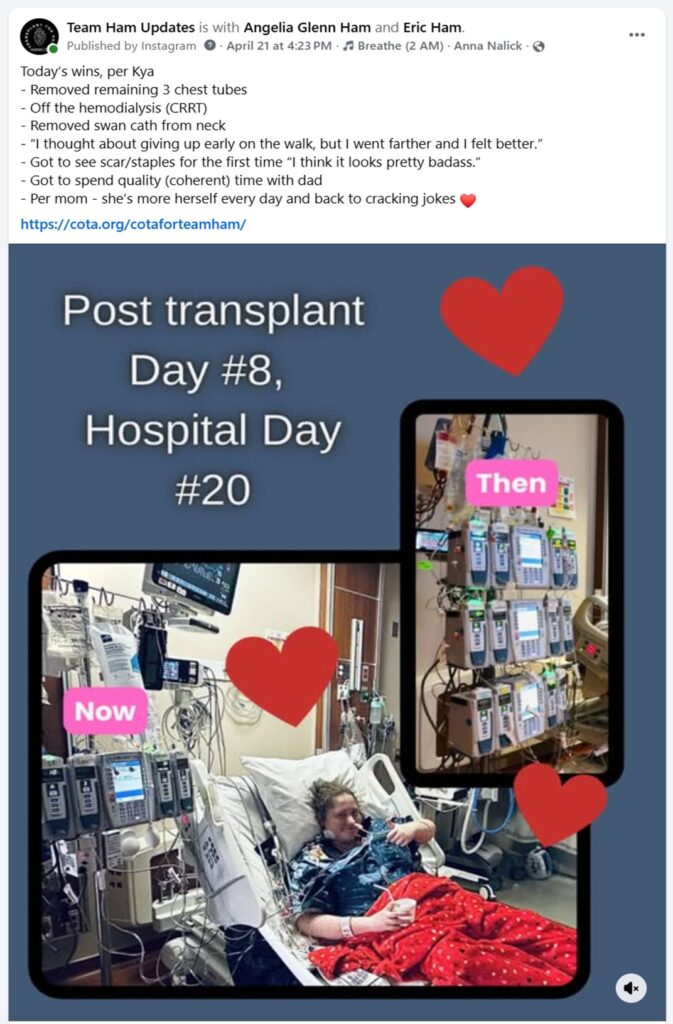
Post Transplant Day 8 – Hospital Day 20
Post Transplant Day 9 – Hospital Day 21

Post Transplant Day 10 – Hospital Day 22 (video)
Click the following to reach the video: Kya’s trip outside
Update
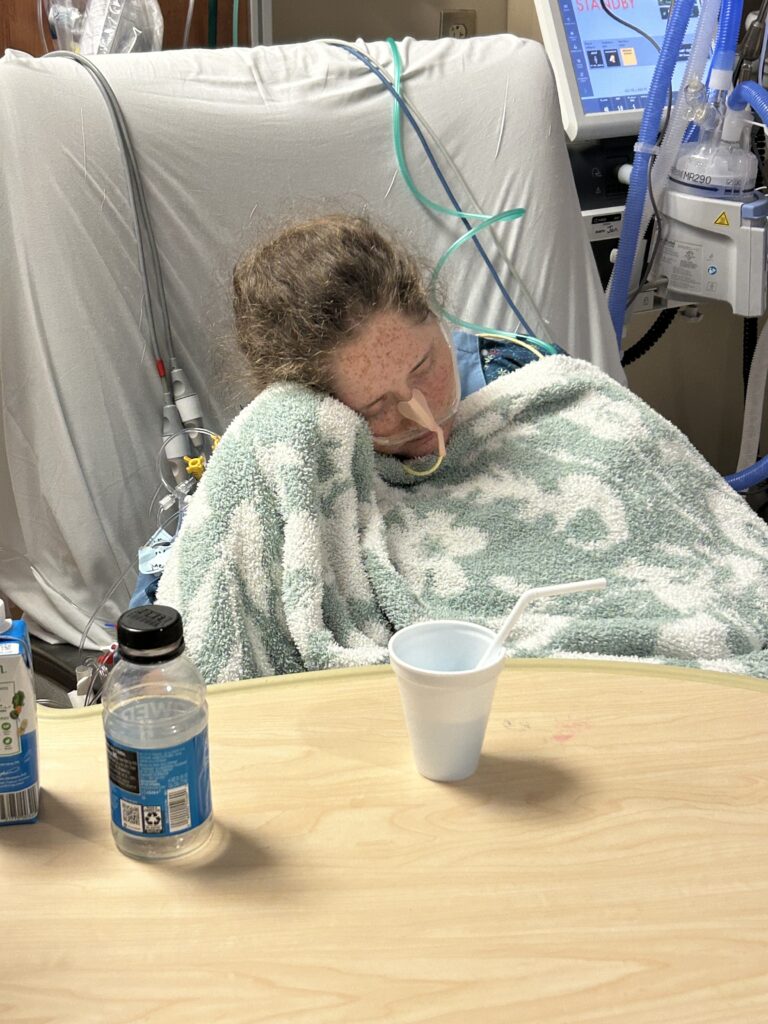
We’ve been in survival mode: alarms, uncertainty and the terror of watching Kya fight for every inch of stability. It felt like an eternity, but the ground finally shifted. Her body responded. The medical team adjusted. Strength returned in places we weren’t sure we’d see. What started as a week rooted in fear has ended as a week defined by forward motion, even with a few hesitations and medical concerns along the way.
Medical
Kya is actively weaning from the medication that helps her new heart pump (inotrope), and her heart is showing signs of independent strength. The vas-cath was removed from her groin and she now has a PICC line in place for medications. Once she no longer needs the inotrope, they can also remove the external pacing wires which all leads to A REAL SHOWER. She is very ready for this moment.
She’ s working through atelectasis (partial lung collapse) and getting stronger with breathing exercises and mobility. Respiratory, Physical and Occupational Therapies are helping her rebuild endurance and relearn daily activities while protecting her median sternotomy (the incision down the center of her chest) and the site where her ICD was removed – a device she not longer needs. 😊
The medical care team continues to do a remarkable job. They’re watching her labs closely as adjustments are made daily and will continue for weeks and months ahead. They also are more than happy to answer the million+ questions from Kya’s mom, who also watches her labs closely…maybe too closely. 😉
Anticipating Discharge
Doctors continue to float the idea of discharge sometime mid to late next week. She could leave the hospital with her new heart in less than a week…we have to pause here and just sit with that for a moment. These are words we weren’t sure we’d get to write.
She may transition to inpatient rehab to continue building strength, or may go straight home (our temporary Nashville home) and begin outpatient rehab. The early weeks are full of frequent clinic visits, biopsies and heart cath checks for rejection, along with ongoing therapies to retrain her body to live with her new heart.
Education
We’ve had a lot of education this week including more than 20 educational videos and an hour with the pharmacist, with more to come. Here are a few things we thought we’d share:
Medication
The current plan includes 30+ pills (approx medications) per day, mostly split into two doses, 12 hours apart. It’s a strict dosing schedule to keep her immune system from attacking her new heart. There are many rejection risks we can’t control, but maintaining the medication schedule is one we can, even though it will have challenges. Even one missed dose can trigger rejection.
Steroid-Induced Diabetes
High-dose steroids can cause temporary diabetes. It’s common in early transplant recovery and monitored closely. We will have additional education regarding blood sugar checks and insulin adjustments, hoping this resolves as steroids decrease.
Rejection Risk
Younger immune systems are stronger, which is amazing in every context except transplant. It means higher rejection risk and often more meds, more labs, more vigilance. The first 3 months are the most precarious, and the first year remains critical.
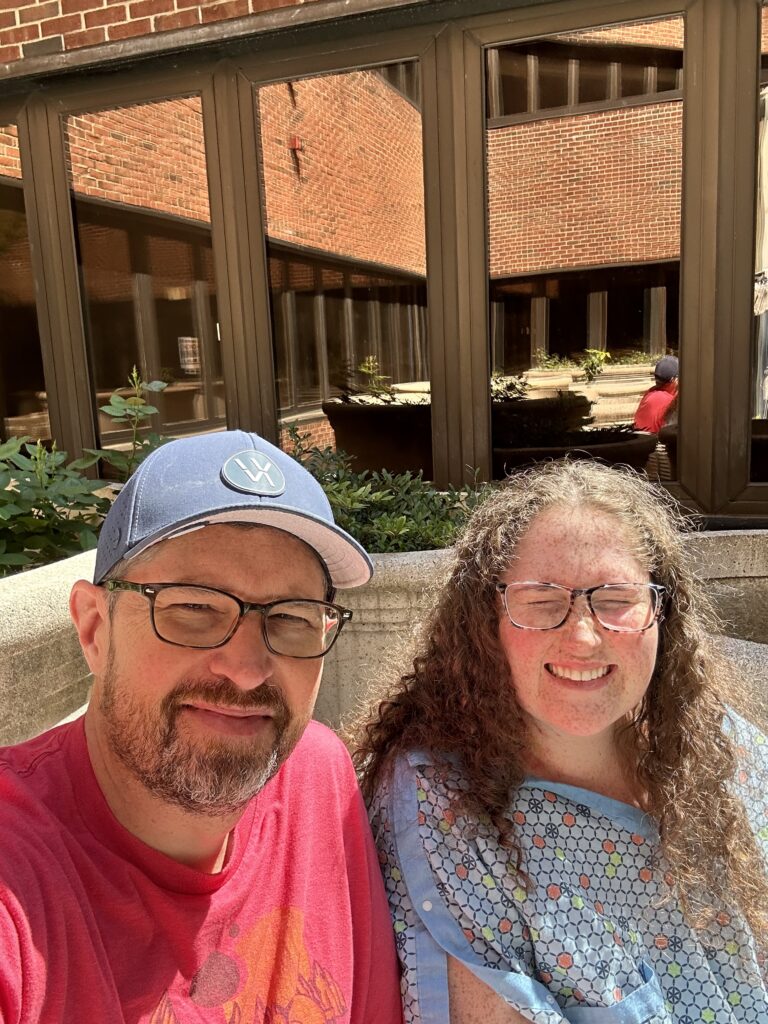
Cost of Care
Many people have asked how COTA support works and why it matters for our family. COTA helps families with transplant-related expenses that insurance doesn’t fully cover. For example, lodging, pharmacy needs and co-pays. Our COTA fundraising goal supports both Kya and Eli.
Since February 2025, nearly 25% of what we have raised for COTA for Team Ham has already gone toward cardiac care expenses, just to get to this significant transplant moment. We haven’t yet begun navigating the surgical or inpatient care expenses. We are also thinking about the lifelong medication and clinical expenses Kya will need for the rest of her life.
Eli will also need a transplant in the future to extend his life. The average lifespan of a transplanted heart is around 15 years, which means transplant may not be a one-time event for either of them.
COTA stays with them for life. If they need another transplant at 25, 30, 50, COTA is still there. For lifelong medication, cardiac care support, travel and lodging for care, COTA is still there.
Your generosity doesn’t just help us survive this moment. It builds a foundation for their future. We are deeply grateful.
Coming soon – Shirts, Tanks & Stickers
COTA For Team Ham merch is coming again soon! This will include t-shirts, tank tops and stickers. We’ll share ordering details once they’re finalized.
In Awe
We opened this week in shock, fearing the worst while being held up by your encouragement, love and prayers. But we end in awe – awe of her grit, her fight. Awe at the miracle unfolding right in front of us and the possibility of a future we weren’t sure we’d ever get to embrace. We once wondered how many days we had left. Now we’re planning for the days ahead. And that shift is everything.
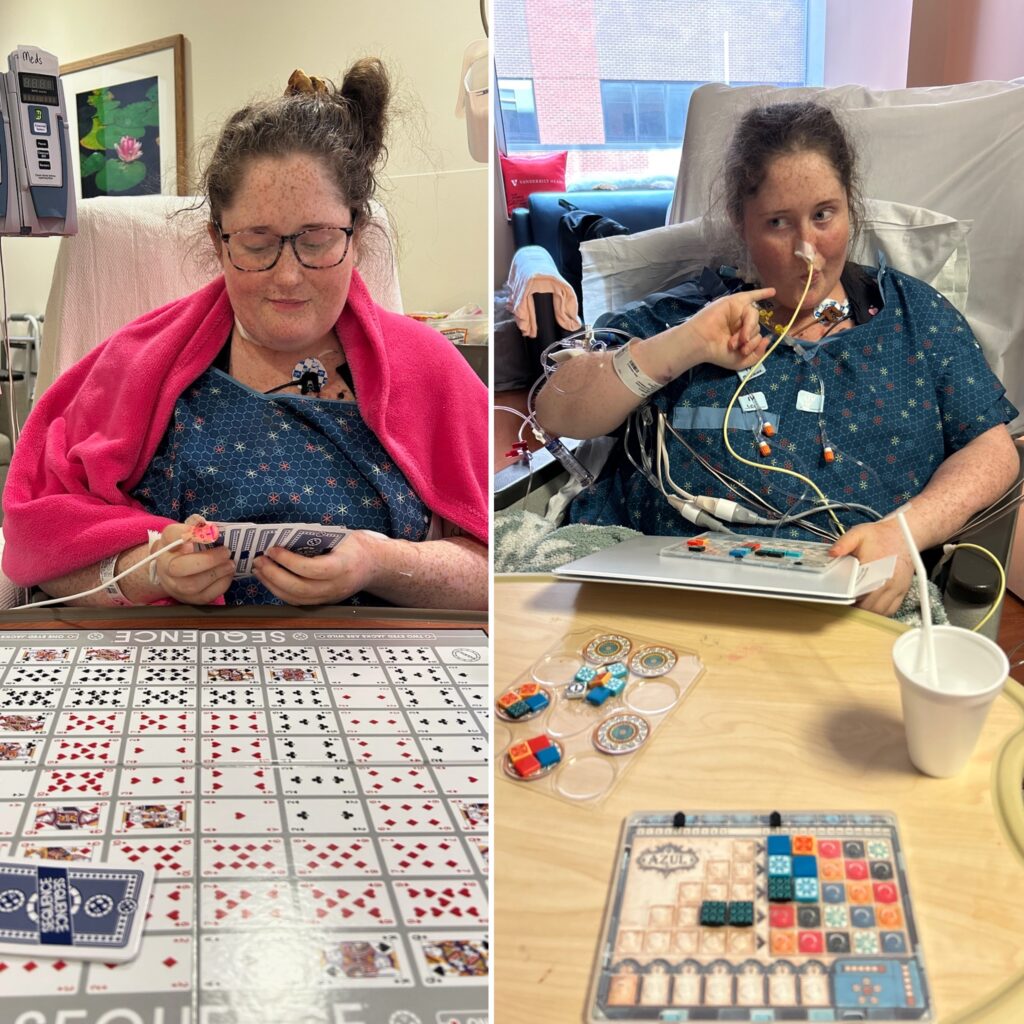

She’s such a warrior! Continued prayers for you ALL.
❤️